How to Hem Flare Leggings Without Killing the Flare
Quick Answer: The flare in a pair of flare leggings comes from a panel that widens between the knee and the ankle, so cutting length off the bottom removes the widest part of that panel. To keep the shape, take out no more than 2 inches from the hem, and remove anything beyond that from above the knee instead. If you need 3 inches or more gone, hemming from the bottom will leave you with a bootcut at best and a straight leg at worst.
You found the right pair, in the right fabric, and they are two and a half inches too long. The temptation is to cut and go. The result is a legging that fits perfectly and looks like something else entirely.

Where does the flare actually come from?
Not from the hem opening - from the angle that builds toward it.
The flare is a gradient, not an edge. The side seam of a flare legging starts narrowing at the thigh, reaches its tightest point around the knee, then opens outward at a consistent angle down to the hem. The visual effect people want comes from that angle being visible over a long enough run.
The widest inch is the last inch. Because the panel opens continuously, the very bottom is where the flare is most pronounced. Cut it off and you are removing exactly the part doing the work.
Two inches is roughly the tolerance. On most flare cuts, removing up to about 2 inches shortens the leg without visibly reducing the hem circumference. Past that, the opening narrows enough to read as bootcut, and past 4 inches it reads as straight.
Petite-cut pairs have a steeper angle. Brands that offer a petite flare compress the same opening into a shorter run, which is why a petite pair hemmed by an inch loses shape faster than a regular pair hemmed by two.
How do you shorten more than 2 inches?
You remove the length from above the knee, where the leg is close to straight.
The section between mid-thigh and knee is nearly parallel. Taking length out there changes almost nothing about the silhouette, because the side seams are running roughly straight through that zone.
This means opening the side seams. Cut a horizontal band out above the knee, rejoin the two edges, and re-sew the side seams with a stretch stitch. It is more work than a hem and it is the only method that preserves the flare fully.
Match the stitch to the fabric. Four-way stretch fabric needs a zigzag, a lightning stitch, or a serger - a straight stitch will pop the first time you squat. If you are having this done, ask specifically whether they use a coverstitch or serger on activewear.
Split the difference for a 3-inch problem. Take 2 inches off the hem and 1 inch from above the knee. The hem removal stays inside tolerance and the thigh removal is invisible.
Or do the free version first: try the shoe. A 2.5-inch problem in flats is often a zero-inch problem in a 2-inch heel or a platform sneaker, and flares are designed to be worn with some height under them.
What Nobody Tells You About Hemming Stretch Fabric
The fabric grows while you sew it. Stretch knit feeds through a machine under tension and comes out slightly longer than it went in - which is why a hem measured perfectly can end up half an inch long. Pin generously and sew slowly, or use a walking foot.
Cutting a stretch hem is not like cutting a woven one. The fabric rolls at the cut edge. Lay it flat, weight it, and cut with a rotary blade rather than scissors if you have one - dragging with scissors distorts the line before the blade reaches it.
A raw edge is genuinely an option. Most performance knits do not fray the way woven fabric does. A clean cut, left raw, is what a lot of expensive brands do deliberately - it keeps the hem weightless, which matters because a heavy hem changes how the flare swings.
Original hems are heavier than they look. Many flare leggings have a slightly weighted or double-turned hem specifically so the leg hangs and moves properly. Replicating that matters more than matching the stitch color.
Wash before you measure. Performance fabric shrinks a little on the first wash and relaxes a little with wear. Hemming a brand-new pair straight out of the bag is how you end up an inch short in a month.
And the length target is not the floor. For flares, aim for the hem to sit about half an inch off the ground in the shoe you will actually wear them with. Higher than that and the flare stops reading as a flare.
Does the same logic apply to late-summer wear?
It applies more, because this is the season when your shoe height changes.
Sandal-to-sneaker transition is roughly an inch. Flat sandals in August, then a cushioned sneaker in September, is a real length difference - and a pair hemmed for sandals will look cropped by autumn.
Hem for the shoe you wear most, not the shoe you wear now. If nine months of the year you are in a sneaker with a 1-inch stack, hem for that and accept slightly long in sandals.
Longer hems drag more in wet weather. As the season turns, a hem that clears the ground by only a few millimeters picks up water and dirt from every damp sidewalk, and the weight of a wet hem distorts the flare while it dries.
Store them hanging by the waistband. Folding flare leggings over a hanger bar creases the panel exactly where the flare starts, and that crease shows.
FAQ: Flare Legging Hemming Questions, Answered
Can a tailor hem flare leggings properly?
Many can, but ask specifically whether they work on stretch knits and what stitch they use. A tailor who mainly does suiting may use a straight stitch, which will break under stretch. Alteration shops attached to activewear or dance retailers are usually the safest bet.
Will hemming make them look like bootcut?
Only past about 2 inches. Under that, the change in hem circumference is small enough that the silhouette reads the same. Beyond 3 inches, yes - you have made a bootcut.
Is it worth buying a petite length instead?
If a brand offers one, almost always. A petite flare is redrafted so the full flare angle fits in a shorter leg, which is exactly what hemming cannot do.
How do I know how much to take off?
Wear the shoes, stand on a flat floor, and have someone pin the hem so it sits half an inch off the ground. Then subtract nothing - that pinned line is the finished length, not the cutting line. Cut half an inch below it if you are turning a hem.
TL;DR:
- The flare is built from a widening panel, and the last inch is the widest - hemming removes the effect first.
- Two inches is the safe limit from the bottom; anything more should come out above the knee.
- Use a stretch stitch, cut with a rotary blade, and consider leaving the edge raw for a lighter swing.
- Wash first, measure in your actual shoes, and aim for half an inch off the ground.
The reason this is worth the extra step is that flares are one of the few silhouettes where the proportion does all the work. Get the length right and a basic black pair reads as deliberate; get it wrong by two inches in the wrong direction and the same pair reads as leggings that did not fit. Fifteen minutes of measuring is a better investment than the alteration itself.
See It in Motion
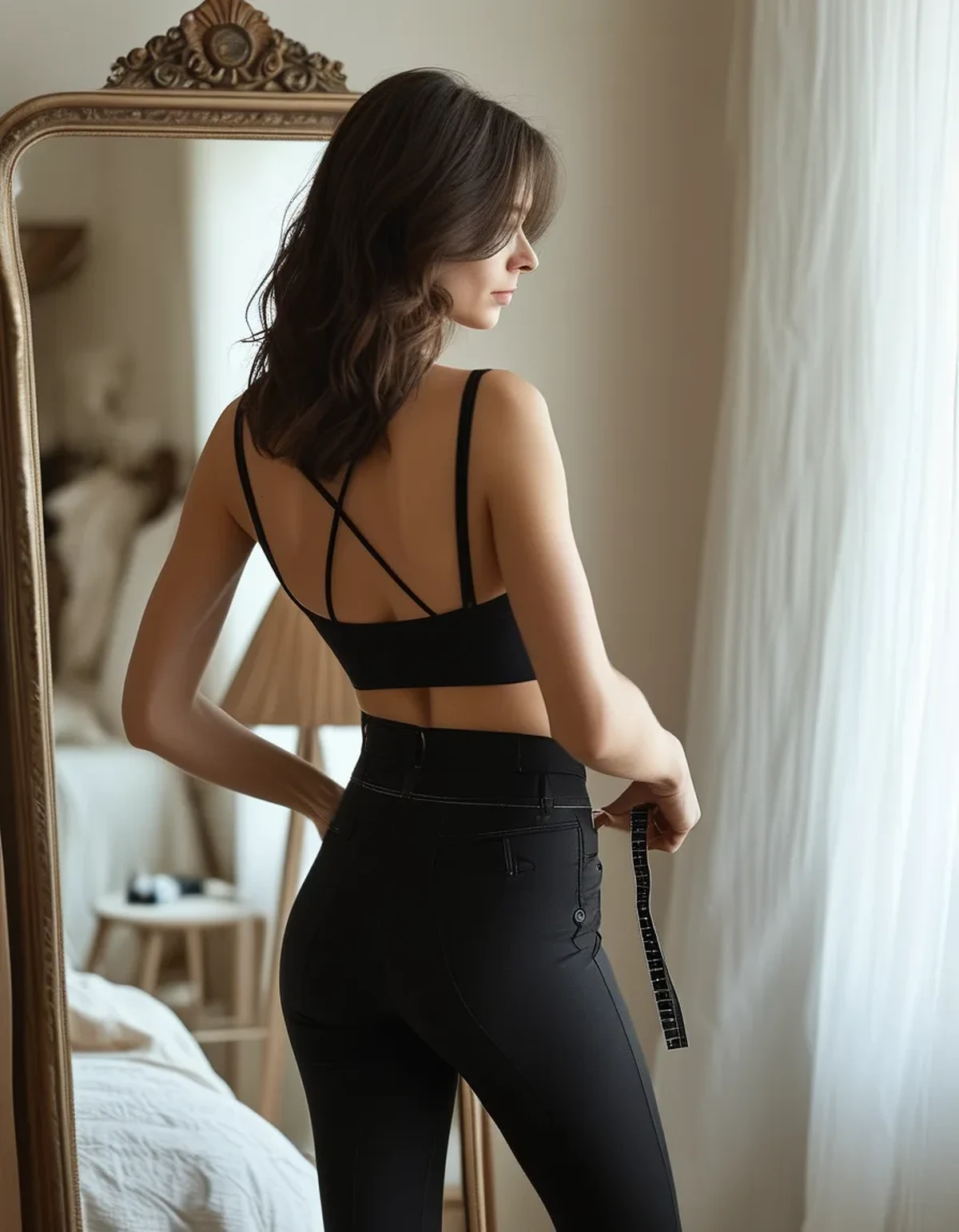
Seen here: Bootcut Capri Yoga Pants with Pockets — shop similar styles on bubblelime.com
Keep Reading
This article is for general informational and styling purposes only. Fit, sizing, and product availability may vary.