How to Store Flare Leggings So the Hem Keeps Its Shape
Quick Answer: A flare hem holds its shape through the fabric’s memory, and folding puts a crease across the widest, most stretched part of the panel where it sets permanently. Store flare leggings hanging by the waistband, or folded lengthwise along the seam rather than across the leg. Never store them damp, never fold them warm from the dryer, and never leave them at the bottom of a drawer under weight.
The flare looked perfect in the shop and it looks slightly sad now. Not worn out — the fabric is fine, the color is fine — but the hem has lost its swing and hangs a bit limp.
That did not happen while you were wearing them. It happened in the drawer.
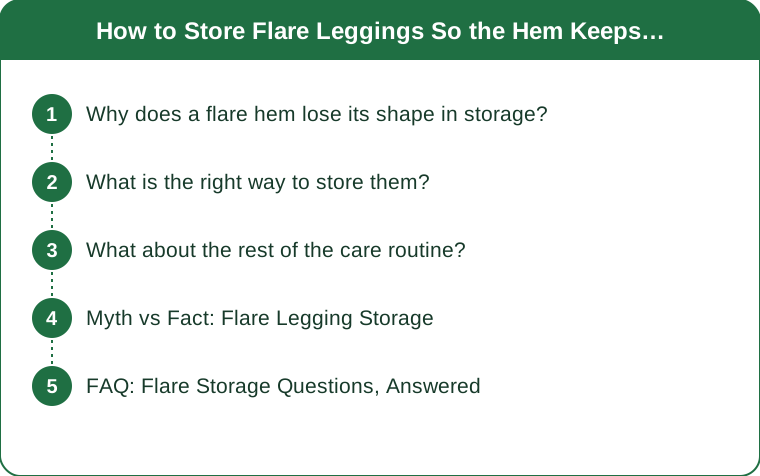
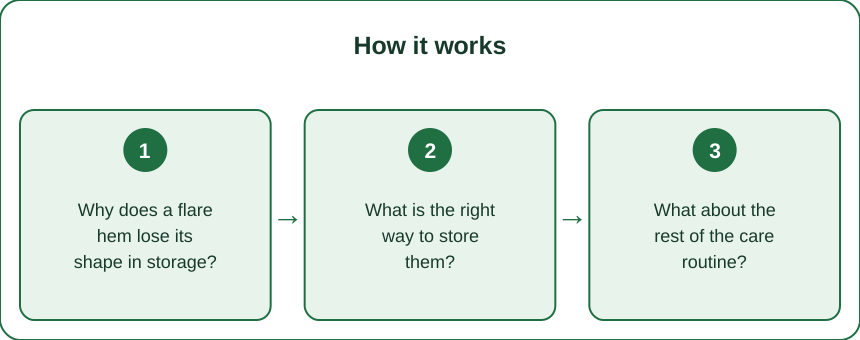
Why does a flare hem lose its shape in storage?
Because the hem is the part of the garment under the most tension and the least support.
A flare panel is cut so that the fabric widens from the knee down. To hold that shape, the knit relies on two things: the recovery of the elastane, which pulls the fabric back to its resting dimensions, and the memory of the fabric structure itself, which was set during finishing.
Both of those are affected by how the garment sits when it is not being worn.
Folding across the leg puts a crease in the widest part of the panel. A crease is a permanent local deformation of the fibers, and in a synthetic knit it does not fall out the way it does in cotton. Fold across the flare, leave it a week, and the fabric has been held in a bent position long enough for the fibers to take a set.
Compression does the same thing more slowly. A pair at the bottom of a drawer with eight other pairs on top spends weeks under load, and the elastane is being held compressed the whole time. Elastane recovers best when it is unloaded, which is why anything stored under pressure loses recovery faster than the same garment stored hanging.
Heat accelerates all of it. Fibers take a set far more readily when warm — this is exactly how the flare shape was created at the factory. Folding leggings straight out of a warm dryer and putting them away is setting a crease deliberately, with heat, which is the fastest possible way to ruin the hem.
What is the right way to store them?
In order of best to acceptable.
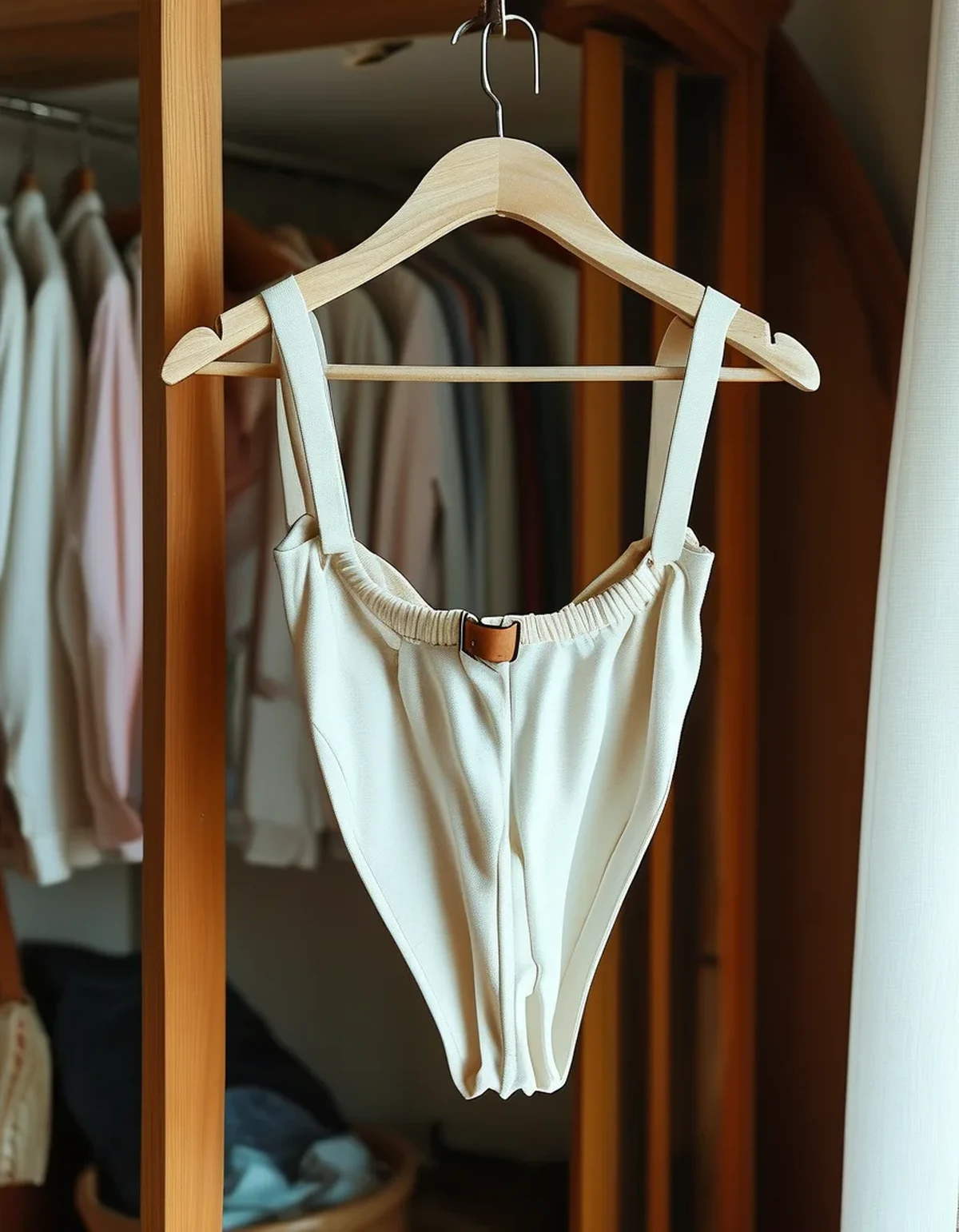
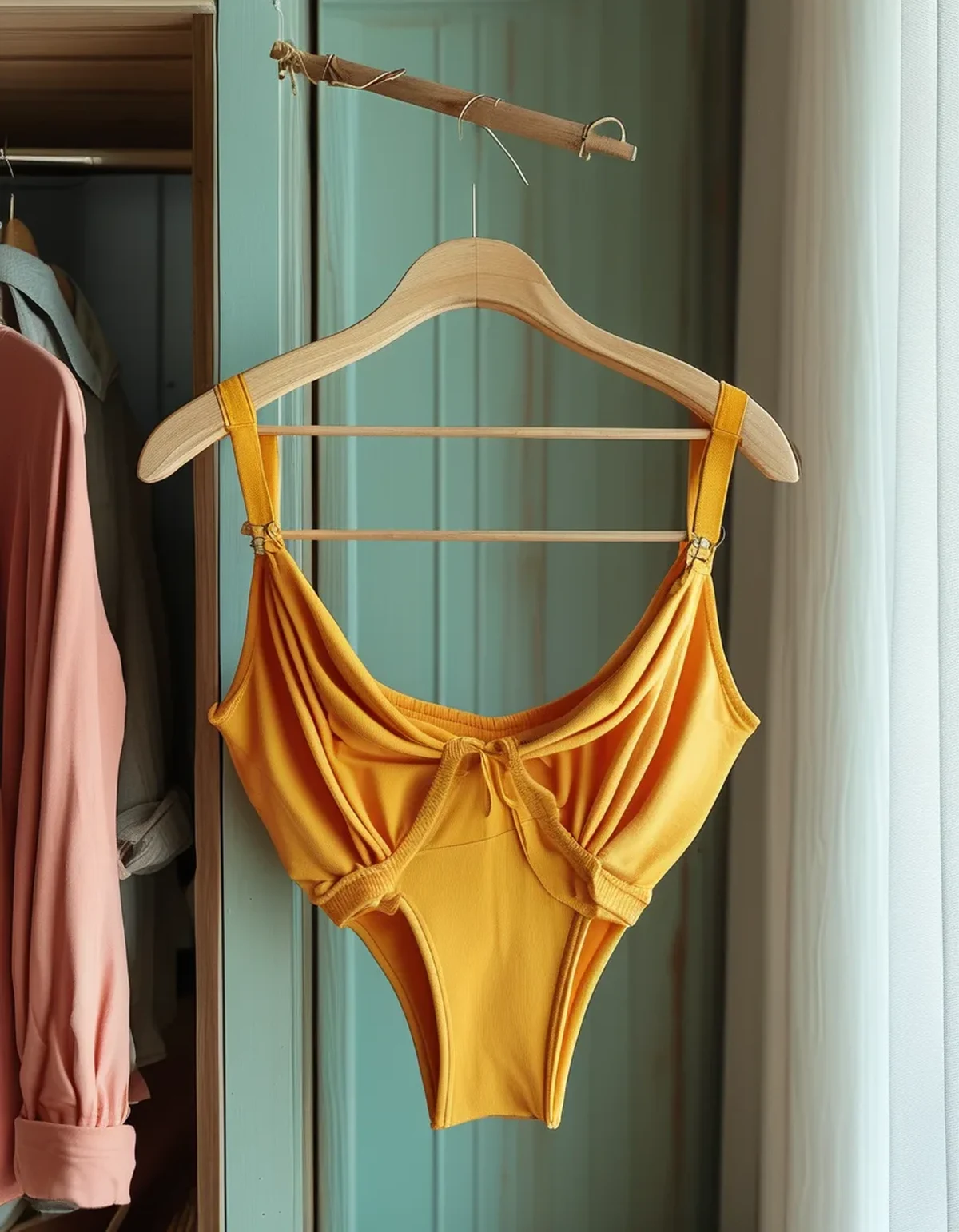
Hanging by the waistband, full length. A clip hanger, or a trouser hanger with the waistband clipped and the legs hanging free. The flare hangs in its natural shape, there is no crease anywhere, and gravity is pulling in the direction the panel wants to go. This is the correct answer and it costs the price of a hanger.
Hanging folded over a bar at the knee, if you are short of length. Second best. The crease lands above the flare, in the straight part of the leg, where it does far less damage. Use a padded or wide bar rather than a thin wire one.
Folded lengthwise, along the outside seam. If they must be in a drawer, fold them in half down the length of the leg — putting one leg on top of the other, following the seam — and then lay them flat or roll them loosely from the waistband. This puts no crease across the flare at all.
Rolled from the waistband down. Good for travel and for a drawer. Roll loosely, do not compress.
What to avoid entirely: folding in half across the knee or thigh, which puts a hard crease across the widest part; stacking heavy items on top; and vacuum bags, which are the worst option available for anything with elastane because they compress it for months.
Where the drawer matters: keep flares at the top of a stack rather than the bottom, or better, in their own shallow drawer. Two pairs of flares in a drawer of their own will hold their shape far better than six pairs stacked with jeans.
What about the rest of the care routine?
Storage is the end of a chain and the earlier links matter.
Never store them damp. Damp fabric under any pressure at all takes a set, and damp synthetic in a closed drawer develops odor that is very hard to remove. Fully dry, every time, before it goes away.
Do not tumble dry. Beyond the general damage heat does to elastane, the tumbling action puts the flare through hundreds of cycles of being bunched and crushed while hot, which is the single most effective way to destroy the panel shape.
Hang to dry by the waistband, not over a line at the knee. The wet weight of the legs is substantial, and drying folded over a thin line puts that weight onto a crease. Waistband on a hanger, legs hanging free, out of direct sun.
Wash inside out, cold, no softener. Softener coats the fibers and reduces the elasticity of the knit, which directly affects how the flare holds. This matters more on a flare than on a plain legging because the flare has more shaping to hold.
If a crease has already set: steam is the fix, not ironing. Hang them, run a steamer or hang them in a bathroom during a hot shower, then let them dry hanging without touching them. Most creases that are less than a few months old will relax substantially. An iron directly on synthetic activewear will glaze the fabric and the shine is permanent.
And the seasonal one: if you are packing summer clothes away for the year, flares should go into storage hanging or rolled in a breathable bag, never folded flat under weight in a vacuum bag for six months.
Myth vs Fact: Flare Legging Storage
Myth: Hanging stretches leggings out. Fact: Hanging by the waistband applies the weight of the garment along its length, which is well within what the fabric handles, and it is the direction the fabric is designed to be loaded in. What genuinely stretches leggings is hanging them by one leg, or hanging heavy wet ones over a thin bar.
Myth: A crease will fall out when you wear them. Fact: Body heat and movement relax a recent crease, which is why they seem to disappear after twenty minutes. A crease that has been set for months does not fully release, and the fabric there has been permanently deformed. The apparent recovery is what stops people from changing the storage.
Myth: The flare shape is sewn in, so it cannot be lost. Fact: The shape comes from the cut and from the fabric’s finish, and the finish is what degrades. The seams stay exactly where they were while the panel loses its ability to hold the shape between them.
Myth: Higher-quality flares do not have this problem. Fact: Better fabrics have better recovery and take longer to show it. They still take a set from a hard crease under heat, and given how much more they cost, the storage habit matters more, not less.
FAQ: Flare Storage Questions, Answered
How many pairs can I hang on one hanger?
One. Two pairs on a clip hanger press against each other and the outer one takes a crease from the inner. If wardrobe space is the constraint, hang the flares and fold the plain leggings, not the reverse.
What about travel — how do I pack them?
Roll from the waistband, loosely, and put them at the top of the case rather than the bottom. Unpack and hang them within a day of arriving. A flare that has spent a week compressed in a case will recover if it is hung promptly and will not if it stays folded.
Do I need to re-steam them every time?
No. If they are stored hanging you should never need to. Steaming is a repair, not a routine.
My flares came folded in the packaging with a crease already. Is that permanent?
Usually not — packaging creases are recent and relax with steam and a couple of wears. Hang them and steam them before the first wear rather than after, and they will settle.
TL;DR:
- A crease across the flare panel sets permanently in synthetic knit; folding across the leg is what kills the shape.
- Best storage is hanging by the waistband, full length, with the legs free.
- If they must be folded, fold lengthwise along the seam or roll loosely from the waistband.
- Never store damp, never fold warm from a dryer, never stack weight on top, never vacuum-bag them.
- Steam relaxes a recent crease; an iron glazes the fabric permanently.
Buy one clip hanger per pair. It is a small change and it is the difference between a flare that swings for two years and one that goes limp by November.
See It in Motion
Seen here: High Waist Bootcut Yoga Pants with Hidden Pocket — shop it on bubblelime.com
Keep Reading
This article is for general informational and styling purposes only. Fit, sizing, and product availability may vary.