Why Flare Leggings Feel Off in the Crotch Even When the Size Is Right
Quick Answer: Crotch discomfort in flare leggings is usually a rise mismatch, not a size issue — a low or mid-rise cut paired with a flared leg puts more strain on the seam during movement. Sizing up rarely fixes it; switching to a high-rise flare with a gusseted seam almost always does.
You sized up, sized down, tried a different brand — and the crotch of your flare leggings still bunches or digs. That’s because the problem usually isn’t the number on the tag at all.

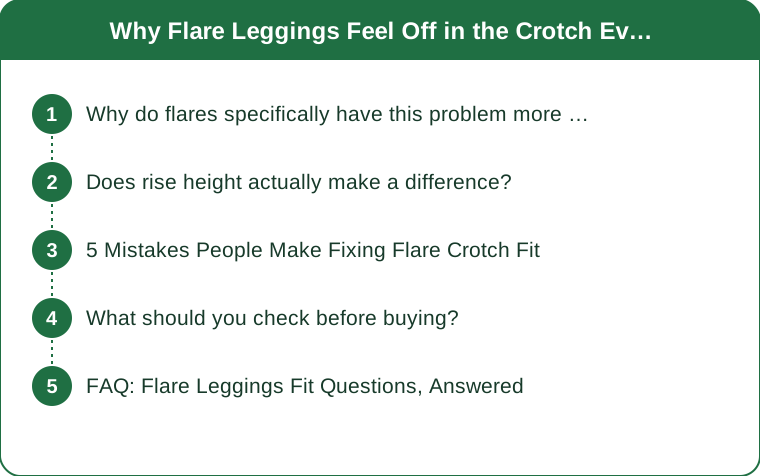
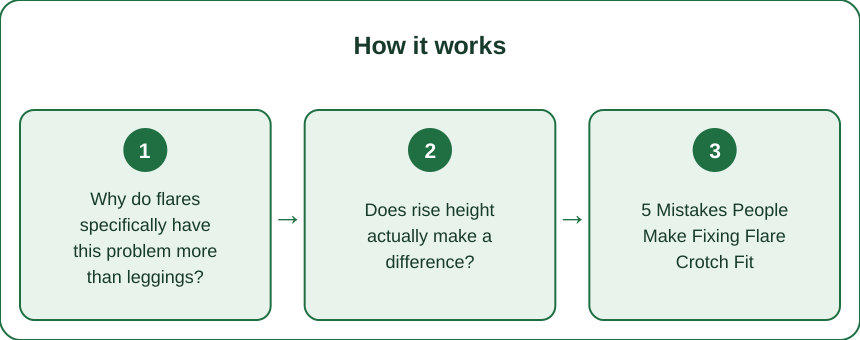
Why do flares specifically have this problem more than leggings?
Flare leggings widen dramatically below the knee, which means more fabric has to move fluidly from a fitted thigh into a loose flare — and all of that transition routes through the crotch seam. A poorly constructed seam concentrates stress exactly there during squats, lunges, or even just sitting down.
Straight-leg leggings don’t have this transition point, which is why the same brand’s flare and straight styles can fit completely differently in that one spot even in the same size.
Does rise height actually make a difference?
Significantly. A high-rise flare sits above or at the natural waist and uses more total fabric through the hip and seat, which distributes movement stress across a larger area instead of concentrating it at one seam.
Low and mid-rise flares have less fabric coverage through the hip, so the same amount of movement force gets funneled into a smaller area — this is the single biggest fixable factor, more than brand or price point.

5 Mistakes People Make Fixing Flare Crotch Fit
1. Sizing up first. This adds room in the waist and thigh but does nothing for seam placement — the discomfort usually persists.
2. Ignoring the gusset. A diamond-shaped gusset panel at the crotch seam adds room specifically where flares need it — its absence is a bigger red flag than the size chart.
3. Judging fit standing still. Always squat and lunge in the fitting room; standing-still fit tells you almost nothing about how the seam behaves in motion.
4. Assuming all flares from one brand fit the same. Rise and gusset construction can vary style to style even within one brand’s line.
5. Washing before confirming fit. Some fabric blends shrink or lose stretch recovery after the first wash — return-window math matters.
What should you check before buying?
Look at the product description for gusset or diamond crotch panel — if it’s not mentioned, check reviews for crotch-fit complaints specifically, since it’s a commonly flagged issue when absent.
In-store, do a full squat and a wide lunge before deciding. If you feel pulling or digging in either position, that’s the seam telling you, not the mirror.
FAQ: Flare Leggings Fit Questions, Answered
Should I size up if flares feel tight in the crotch?
Usually not the fix — try a higher rise or gusseted style in your normal size first before sizing up.
What is a gusset and why does it matter?
It’s a small diamond or triangular fabric panel inserted at the crotch seam that adds room and reduces seam stress during movement — common in athletic-cut flares.
Are high-rise flares always more comfortable than low-rise?
For most body types and movement patterns, yes, because of the added fabric coverage — though personal waist preference still matters for everyday comfort.
TL;DR:
- Crotch discomfort in flares is usually a rise/construction issue, not a sizing issue
- High-rise flares with a gusseted seam distribute movement stress better than low-rise cuts
- Squat and lunge in the fitting room — standing-still fit doesn’t reveal the real problem
- Check for ‘gusset’ in the product description before buying
Next time flares feel wrong, reach for a higher rise before reaching for a bigger size.
See It in Motion
Seen here: High Waist Bootcut Yoga Pants with Side Pockets — shop it on bubblelime.com
Keep Reading
This article is for general informational and styling purposes only. Fit, sizing, and product availability may vary.